
If you work from a rental apartment, you already know the rules, keep it quiet, keep it neat, and do not put holes in anything you do not own. Bass is the part that breaks those rules first, because low frequencies ignore your nice intentions and pile up wherever the room lets them.
The good news is that bass treatment for a rental apartment office does not require construction, and it does not have to look like a band practice space. The bad news is that you cannot “fix bass” with one thin foam panel, and anyone who says you can is selling foam.
Rental friendly bass control is mostly about reducing the worst peaks and smoothing the low end enough that calls, edits, and mixes translate outside your room. You can get there with freestanding bass traps, temporary mounting, and portable panels if you place them with a plan instead of guessing.
I am going to assume you want a room that still works like a home office, with a chair that rolls, a door that opens, and corners that do not become permanent storage. That means every piece of treatment needs to earn its footprint and be easy to move when you clean or rearrange.
What “rental-friendly” bass control realistically means
Bass treatment in a small apartment office is about managing room modes, not “blocking bass” from leaving the room. If your neighbor hears your sub, that is isolation, and isolation is a different project that usually involves mass and construction.
What you can do, and do well, is reduce boominess at your desk and tame the long low frequency decay that makes everything sound smeared. When the decay shortens, speech gets clearer and kick drums stop sounding like they have a second note attached.
The realistic target is smoother response from about 60 Hz to 200 Hz at the listening position, because that range drives most “mud” in home offices. You will still have some unevenness below that, especially if the room is tiny or you sit near a wall.
Rental friendly also means you can remove everything in an hour and leave no marks beyond maybe a little paint burnishing. If a product requires anchors, adhesive that pulls drywall paper, or a fight with your security deposit, it is not rental friendly in practice.
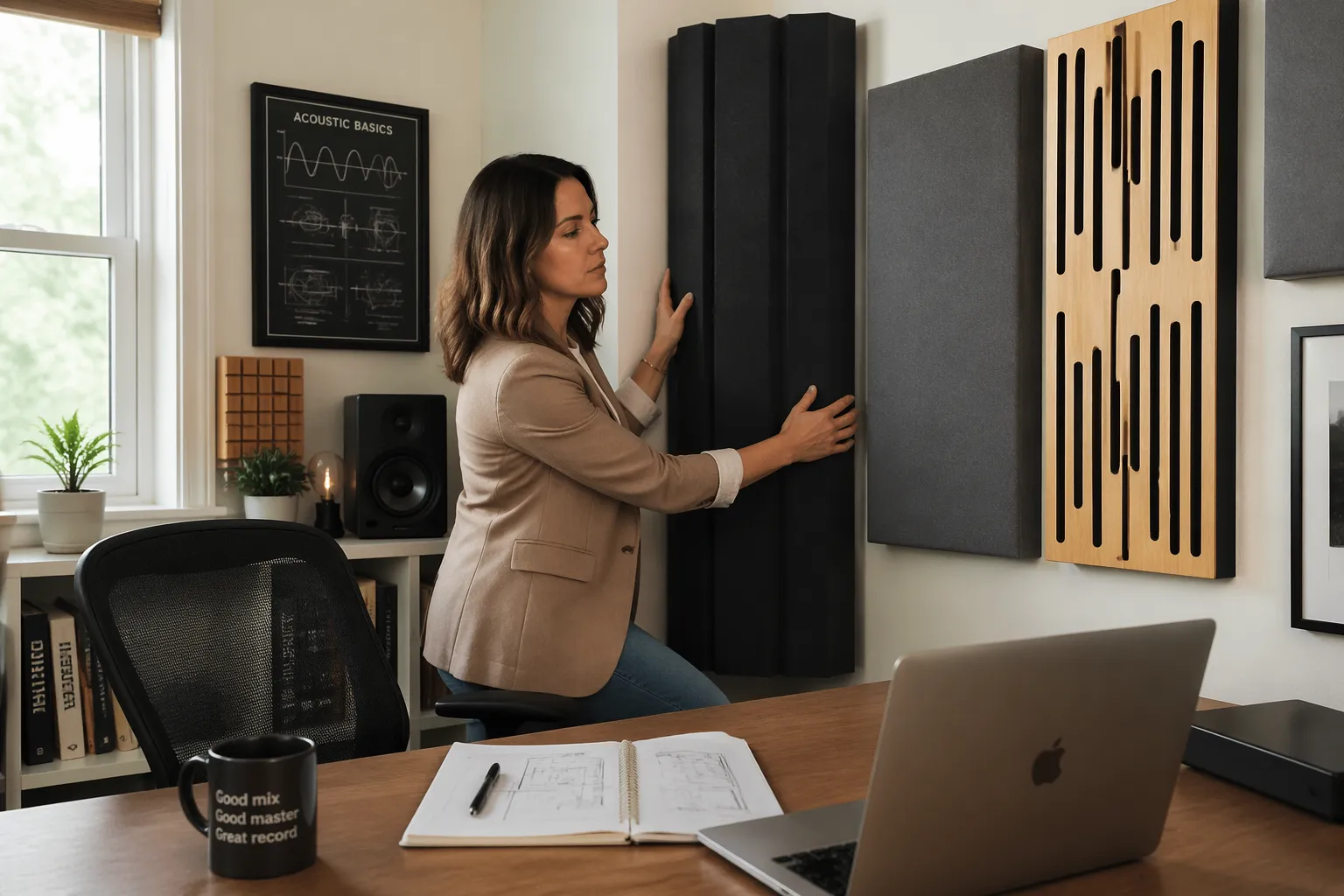
Freestanding and stackable traps: how to use them effectively
Freestanding bass traps are the easiest win for bass treatment for a rental apartment office because they do not ask permission from your walls. The trick is that placement matters more than fancy fabric, so start with where the bass pressure builds up.
In most rectangular rooms, the highest pressure is in corners and along wall boundaries, especially behind speakers and behind your chair. A thick trap in a corner does more than a thin panel at ear height, even if the thin panel looks “studio” in photos.
Look for traps that are at least 4 inches thick, and do not be shy about 6 inches if you can handle the footprint. If you buy prebuilt, check the depth and the core material, because a “bass trap” that is 2 inches thick is basically a midrange absorber with a marketing problem.
Stackable units are underrated because you can build height without drilling, and height helps because corners are corners from floor to ceiling. If you can stack two 4 inch traps safely, you often get a bigger audible change than spreading those same traps across random wall spots.
Temporary mounting methods that avoid wall damage
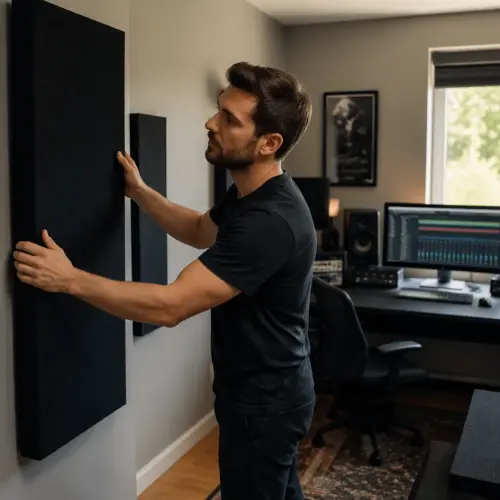
Temporary mounting is useful for portable panels and lighter absorbers, but it is easy to mess up paint if you treat adhesive like magic. I prefer “mechanical” solutions first, meaning tension, clamping, or hanging from something that already exists.
When you do use adhesive products, test a small spot and accept that some paints are fragile even when the product claims “removable.” The goal is to keep your deposit, so treat every wall like it is one bad pull away from paper damage.
| Method | Best use | Risk level in rentals |
|---|---|---|
| Tension rod between walls | Hanging portable panels or blankets behind desk | Low, if pads protect the ends |
| Over-the-door hooks | Rear-wall absorber on a door or closet door | Low, watch for door scuffs |
| Picture rail or existing hooks | Light panels where hardware already exists | Low, if weight stays modest |
| Removable hook strips | Very light panels, cable management, small items | Medium, paint can lift on removal |
| Freestanding panel feet | Gobos, side panels, and quick changes | Low, needs floor space |
Treating corners and rear wall without permanent installs
If you only treat one area for bass, treat corners first, because they are the most consistent “hot spots” across rooms. The front corners behind your speakers are usually the first place to put freestanding bass traps, even if it means moving a plant.
For a rental apartment office, I like corner stacks that sit slightly off the wall, because an air gap improves low frequency absorption without adding thickness. If your trap has a flat back, leave a couple inches behind it and do not cram it tight like a bookshelf.
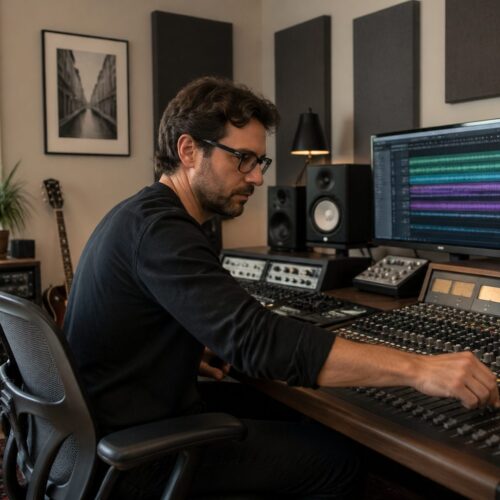
The rear wall behind your chair is the other big one, because that reflection comes back late and thick in the low mids. A pair of portable panels on stands, or a wide freestanding absorber that you slide behind your chair, can clean up the “hollow” sound on calls.
If your desk faces a wall and you sit close to it, you will fight a strong boundary effect that boosts bass at your ears. Pull the desk forward even 6 to 10 inches if you can, then use a thick panel behind the monitors so the wall is not doing all the talking.
Studio geometry basics for small apartment offices
Geometry sounds like a fancy word, but it mostly means where you sit, where the speakers sit, and how close everything is to boundaries. In a small room, a bad layout can erase the gains from decent treatment, which is annoying but true.
Start by centering your desk on the short wall if the room allows it, because it gives you more distance to the rear wall and more symmetry left to right. Symmetry matters because uneven side distances can make bass and imaging shift to one side, and you cannot EQ that away cleanly.
A good first guess for the listening position is about 38 percent of the room length from the front wall, measured to your head. It is not a law, but it often keeps you out of the worst nulls that happen at the halfway point.
Keep speakers the same distance from the side walls, and keep them off the desk surface as much as you can with stands or isolation pads. When the desk reflects low mids and the wall reinforces bass, you get a thick, chesty sound that makes you turn things down too far.
Storage and mobility: keeping the room usable day to day
The fastest way to hate your treatment is to make it block drawers, trip you, or turn your office into a maze. Rental friendly setups work because they move, so plan where each trap goes when you need the floor back.
Freestanding bass traps can live behind a curtain, beside a bookshelf, or flat against a wall when you are not working, as long as you can bring them back to the corners quickly. If you treat them like furniture, you will actually keep them in the room instead of “storing” them in a closet for months.
Portable panels on feet are great because you can swing them into place for recording, then park them against the rear wall like a folding screen. If you have to drag heavy traps across carpet daily, add felt pads or small furniture sliders so you do not wreck the floor.
Think about cable runs and door swings before you commit to big corner stacks. A trap that blocks the closet or forces your chair into a weird angle will become a permanent annoyance, and then you will stop using it.
Testing and adjusting without drilling new holes
You do not need lab gear to improve bass, but you do need feedback that is better than “seems fine today.” A free measurement app can help, yet the most practical approach is to make one change at a time and listen to the same references every time.
Use a slow sine sweep or bass heavy music you know well, then move one trap and repeat, because your ears will forget quickly. If you can borrow or buy a USB measurement mic, Room EQ Wizard is worth the learning curve, and it makes placement decisions less emotional.
- Play a 20 Hz to 200 Hz sweep at moderate volume
- Mark the loudest corner spots with painter’s tape
- Move one trap, then re-test from the chair
- Check left-right speaker balance with mono bass lines
- Measure decay time, not just frequency response
- Re-check after moving desk or adding a rug
Portable panels that help bass more than you think
Portable panels are usually sold as mid and high frequency tools, but they can still help bass treatment if you use enough thickness and cover enough area. A 4 inch panel with an air gap can reach into the low mids where a lot of “bass problems” actually live.
Place portable panels at the first reflection points on the side walls if you can do it without permanent mounting. That will not fix a 50 Hz null, but it will reduce the smear that makes you misjudge bass level and EQ too aggressively.
Panels also work as movable rear-wall treatment, which is a big deal in a rental where you cannot build a deep absorber across the whole wall. If you record voice, put one panel behind the mic and one behind your head, and the room stops sounding like a bathroom.
Do not buy ultra thin “acoustic art” and expect it to act like a bass trap. If the panel is light enough to hang with a single tiny hook, it probably does not have the mass and depth to do much below 200 Hz.
Working around windows, doors, and weird corners
A lot of apartment offices have one good corner and three compromised ones, thanks to windows, radiators, or a door that swings into the space. You can still get results if you treat the best corners first and stop obsessing over perfect symmetry.
If a corner has a window, you can place a freestanding bass trap slightly forward of the glass and treat it like a “false corner.” Leave enough space so curtains still move, and do not trap moisture against the window if you live somewhere humid.
Doors are annoying because you cannot stack a trap where the door needs to open, but a thick absorber on the back of the door can help the rear wall problem. Over-the-door hooks and a lightweight panel can turn a hollow door into something useful without permanent changes.
For rooms with one open side into a hallway or kitchen, treat the remaining corners harder and accept that the open boundary changes the bass behavior. The upside is that open boundaries sometimes reduce the worst pressure buildup, so you may need fewer traps than you expected.
Buying and DIY tips that keep landlords calm
If you buy, pay for depth and density before you pay for fancy shapes, because bass does not care about wedges and ridges. A simple rectangular trap with a solid core and breathable fabric often beats a “designer” piece that is too thin.
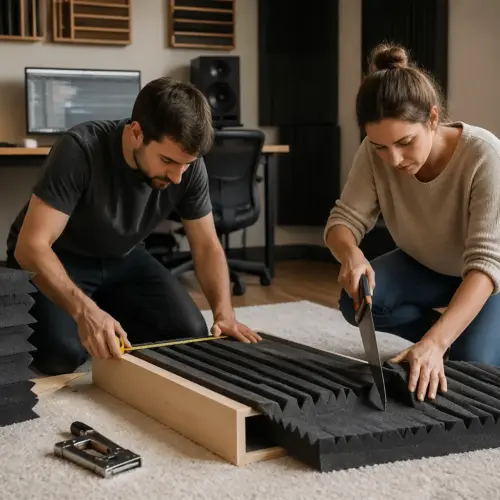
If you DIY, use mineral wool or fiberglass boards designed for acoustic use, wrap them in breathable fabric, and seal the back if you worry about fibers. Keep everything freestanding or mounted to a frame, because the whole point is temporary mounting without repair work later.
Be careful with adhesives, spray glue, and anything that off-gasses in a small room where you sit all day. I would rather see you build one sturdy freestanding frame than stick ten small squares to a wall and regret it when you move out.
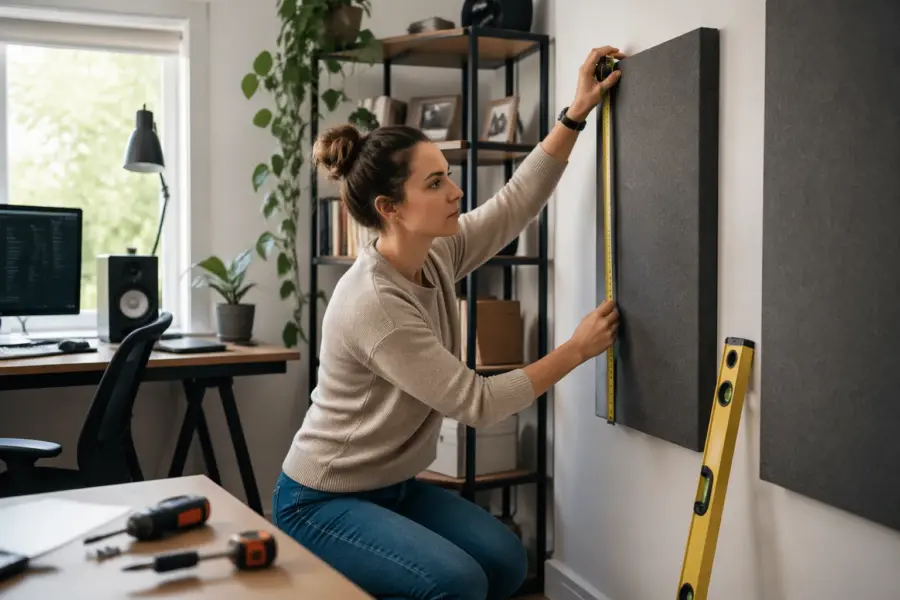
Measure your space before ordering, because many freestanding bass traps are deeper than you picture on a product page. If your chair already barely clears the rear wall, a 6 inch trap plus air gap may force you to change the desk position, and that is a bigger decision than the purchase.
Conclusion
Bass treatment for a rental apartment office works best when you treat the room like a movable system, not a permanent build. Freestanding bass traps in corners, portable panels at smart spots, and careful temporary mounting can make the low end calmer without risking your lease.
Start with placement and layout, then add thickness where the room actually stores bass energy. If you test as you go and keep everything easy to move, you can have a home office that sounds controlled on Monday and packs up clean when you move out.