
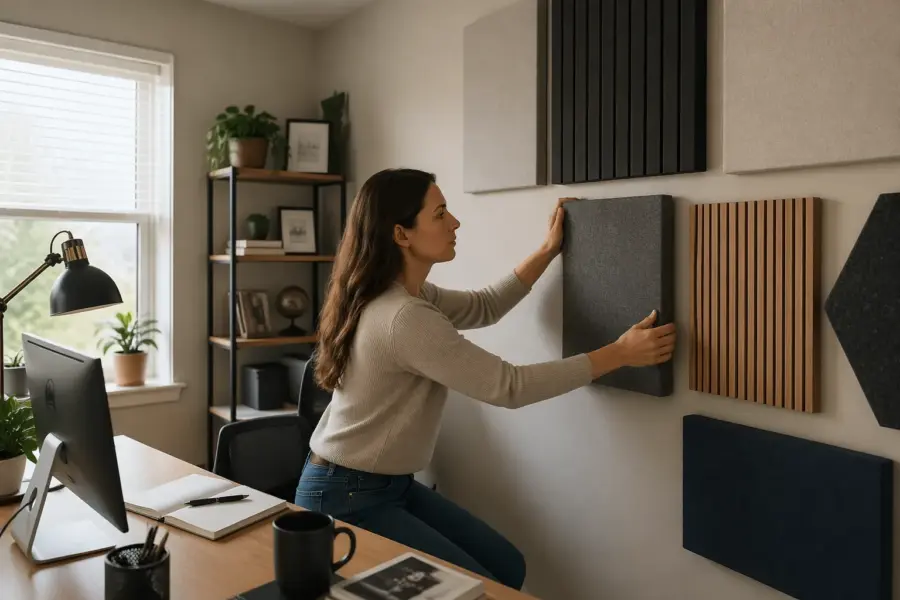
Acoustic panels make a home office calmer and more focused, but they also add new materials to your walls that you did not have there before. If you care about acoustic panel fire safety home office setups, the goal is simple, control what can burn and keep it away from what gets hot.
I have seen plenty of DIY studios where the sound is great and the safety choices are questionable. A few small decisions about materials and placement do most of the work, and they usually cost less than the panels themselves.
Fire risk in a home office is usually about heat sources, electrical faults, and careless mounting, not spontaneous combustion. Panels and fabric wraps can still add fuel, so you want them to burn slowly, self extinguish, and stay clear of trouble spots.
This article sticks to practical basics you can apply without turning your office into an inspection project. You will see where common panel cores behave well, where they behave badly, and how to avoid the sketchy marketing that shows up online.
Understanding common panel materials and their basic fire behavior
Most acoustic panels are a porous core plus a fabric wrap, and the core is the part that matters most for fire behavior. The three cores you see most are fiberglass, mineral wool, and foam, and they do not act the same when exposed to flame.
When people say a panel is “safe,” they often mean it does not ignite easily in a quick test. What you actually care about is how it behaves after ignition, how fast flame spreads, and how much smoke it produces in a small room.
Another detail that gets missed is that panels are assemblies, not single materials. A noncombustible core can still be wrapped in fabric, glued with adhesive, and framed with wood, and those parts can dominate the burn behavior.
Rigid fiberglass boards like Owens Corning 703 or 705 are common in DIY builds because they absorb well and hold shape. Fiberglass itself is not a good fuel, but the binder and facing materials can burn, so the full panel build matters.
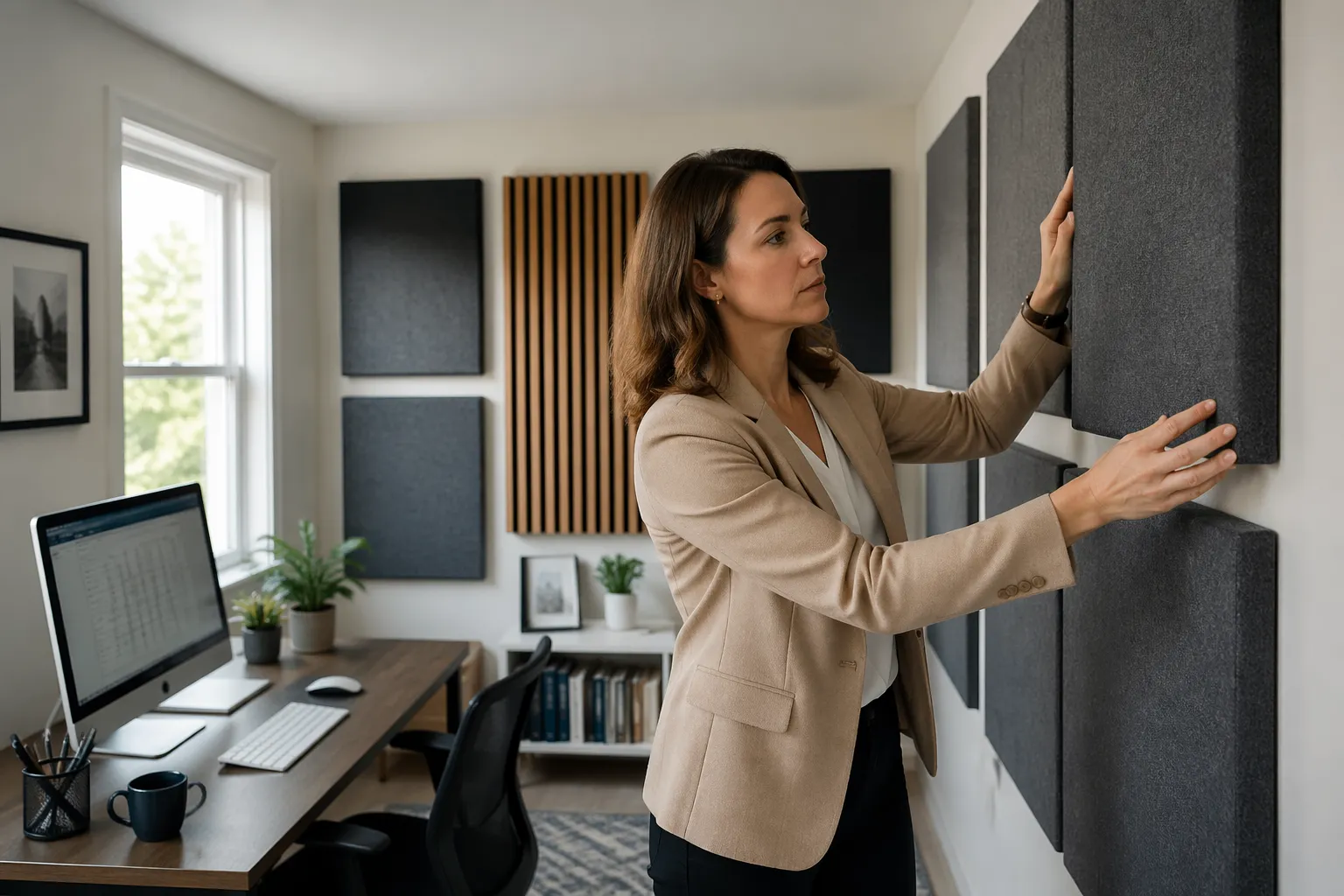
Fiberglass panels also vary by density, and that changes how they handle air movement and heat exposure. A denser board can be more dimensionally stable, but you still need to treat the wrap and frame as the ignition layer.
If you cut fiberglass yourself, you may be tempted to add extra paper or plastic backing to keep fibers contained. Paper facings and plastic films can add fuel or melt, so choose containment methods that do not create a new fire problem.
Mineral wool boards like Rockwool Safe’n’Sound or Roxul Rockboard are also popular and generally handle heat better than many foams. They can still smoke and char surrounding wraps, yet the core tends to resist flame spread compared with plastic based cores.
Mineral wool also tends to tolerate higher temperatures before it changes shape, which matters near lighting and electronics. That does not mean it is magic, because the first thing to burn is still usually the fabric and any dust sitting on it.
Some mineral wool products are sold for sound, some for insulation, and some for fire stopping, and they are not identical. If a seller is vague about the product line, assume you are buying for acoustics first and verify safety separately.
Open cell polyurethane foam tiles are the ones that make me nervous in home offices, especially cheap wedge packs from marketplaces. Some foam is treated, some is not, and untreated foam can ignite fast and drip, which is the opposite of what you want on a wall near power.
Even when foam claims to be “flame retardant,” the practical question is how it behaves when the flame source is removed. A foam that self extinguishes quickly is very different from one that keeps burning or produces heavy smoke.
Foam tiles also tend to be installed in large continuous areas, which can create a bigger surface for flame spread. A few small panels are one thing, but a full wall of foam changes the fuel load of the room.
Wood frames and backers change the story because wood is a predictable fuel source. A pine frame around a noncombustible core can still burn if a fire reaches it, so think of the frame as a separate material choice, not just structure.
Thin plywood backers are common for neat edges and easy mounting, but they also create a continuous sheet of fuel behind the fabric. If you want a backer, consider whether you actually need it, or whether a safer mounting method can do the job.
Plastic corner pieces, 3D printed mounts, and cable clips can also show up in DIY builds, and they are easy to forget. Small plastic parts can melt and drop, which can spread a fire to whatever is below the panel.
Dust is not a core material, but it behaves like fuel when it accumulates on fabric and in corners. If you have pets, open windows, or a lot of foot traffic, plan for cleaning because a dusty panel is a different panel.
Choosing fabrics and wraps with safety in mind
The fabric wrap is often the first thing a small flame touches, like a candle accident or a space heater blast. Your best case is a wrap that resists ignition, slows flame spread, and does not melt into sticky droplets.
Fabric choice is also about how it behaves over time, because sunlight, dust, and cleaning can change it. A fabric that starts out decent can become more flammable if it gets loaded with lint and oils.
Look for products sold as fire retardant fabric, but do not stop at the phrase on the listing. Ask what standard the fabric meets, whether the treatment is topical or inherent, and whether the rating applies after cleaning or humidity exposure.
Topical treatments can be fine, but they can also be uneven if the fabric was sprayed or dipped inconsistently. If you are relying on a treatment, you want to know whether it is built into the fiber or just sitting on the surface.
Some sellers will say “fire retardant” when they really mean “harder to light than paper.” In a home office, you care about what happens when a panel gets hit with sustained heat, not just a quick lighter flick.
Common panel fabrics include polyester, cotton, and blends, and each has tradeoffs. Polyester often melts and shrinks away from flame, cotton can ignite and keep burning, and blends vary so much that the label alone is not enough.
Natural fibers can feel safer because they are not plastic, but that is not how fire works. Cotton and linen can burn cleanly and steadily, which is not what you want on a wall behind your desk.
Some polyester fabrics are engineered for commercial interiors and have solid documentation, while others are cheap and unpredictable. A low price is not automatically unsafe, but it usually means you have less traceability.
If you use Guilford of Maine style acoustical fabric, you are paying partly for predictable specs and consistent manufacturing. If you use bargain burlap, you may get great texture and terrible burn behavior, plus lint that loves to collect around outlets.
Burlap also sheds fibers, and those fibers can migrate into power strips, fans, and PC intakes. A panel that looks rustic can quietly increase dust buildup in the exact places you want to keep clean.
Stretch matters too, because a loose wrap can sag and touch things it should not touch. A tight wrap is not just aesthetics, it keeps fabric off wall plates, lamp arms, and cable runs.
Spray adhesives deserve attention because some are very flammable during application and some stay tacky and collect dust. If you must glue fabric, use minimal adhesive, let it fully cure, and keep cans away from pilot lights and hot bulbs.
Read the adhesive label for ventilation and cure time, because the vapor is part of the hazard. The safest adhesive is the one you do not need, so staple, wrap, and clamp when the design allows it.
If you do use staples, keep them short enough that they do not poke through and scratch wiring or hands during installation. A small cut in a cable jacket from a staple is rare, but it is the kind of rare problem that becomes expensive.
Some people add a thin inner liner under the outer fabric to keep fibers contained and improve the finish. If you add layers, remember you are adding fuel layers too, so choose liners with the same care as the outer wrap.
Do not forget that the fabric is also part of your indoor air environment. A fabric that off gasses or holds odors can tempt you to use sprays and fresheners, and those products can add their own flammability issues.
Safe placement: outlets, power strips, lights, and heaters
Placement is where acoustic panel fire safety home office setups are won or lost, because heat and electricity are the usual ignition sources. The basic rule is boring but effective, keep panels away from anything that can arc, overheat, or get bumped.
Most home office fires do not start because a panel decided to burn, they start because something electrical failed or something hot touched something soft. Panels can turn a small incident into a bigger one if they are placed like curtains around the problem.
Start by mapping every outlet, switch, power strip, charger brick, and lamp cord on the wall you plan to treat. If you routinely plug and unplug gear, do not put a panel where your hand and cable can snag it or crush a cord against it.
It helps to think in “service zones,” meaning areas you need to access without moving furniture or panels. If you cannot reach a power strip switch quickly, you are more likely to ignore a buzzing adapter or a warm plug.
Outlets behind a desk are especially tricky because cords can get pinched when you push the desk back. A panel can hide that pinch point and keep you from noticing a cable jacket slowly wearing through.
Wall warts and charger bricks need airflow, and they can get surprisingly warm during fast charging. If a panel blocks convection around a brick, you can raise its temperature and shorten its life even if nothing catches fire.
Light switches are another common mistake, because people cover them for a cleaner look and then rely on smart bulbs. If you ever need to cut power quickly, a covered switch is a bad surprise.
Keep panels away from door swings and chair backs, because repeated bumps loosen mounts and crush edges. A panel that slowly shifts can end up touching a lamp or draping over a cable bundle months after you install it.
If you have kids or pets, treat low mounted panels like furniture that can be climbed or scratched. A torn wrap exposes fibers and can create loose material that finds its way into electronics.
| Home office heat or electrical item | What can go wrong near panels | Safer placement habit |
|---|---|---|
| Power strip behind desk | Overloaded strip heats up, cords bend and fray | Keep strip visible, mount panels away from cord paths |
| Portable space heater | Hot exhaust scorches fabric, tip over risk | Increase heat source distance, never aim at treated walls |
| Desk lamp with halogen bulb | High bulb temperature, shade can touch fabric | Switch to LED, keep lamps off panel walls |
| Wall sconce or recessed puck light | Heat buildup in a pocket behind a panel | Maintain safe mounting clearance around fixtures |
| Charger bricks and UPS units | Heat during charging, blocked airflow | Leave air gap, do not cover with panels or curtains |
Think about the direction of airflow from heaters and fans, not just the device location. A heater across the room can still blast hot air toward a panel if the desk layout funnels air along the wall.
Also consider sunlight and windows, because direct sun can warm dark fabric and dry out materials over time. Heat from sun is usually not an ignition source by itself, but it can make fabrics more brittle and dusty.
If you use a standing desk, watch for cable movement as the desk goes up and down. A panel edge can become a cable guide in the worst way, rubbing cords until they fail.
If you have a wall mounted monitor arm, keep panels away from its range of motion. A monitor arm that presses into a panel can create friction, stress mounts, and push the panel into outlets behind it.
Printers and small appliances like label makers can also be heat sources, especially during long jobs. Do not tuck them into panel lined corners where their vents blow into fabric.
When in doubt, keep a clear band of wall visible around electrical clusters. It is not as pretty, but it lets you spot discoloration, loose plugs, and dust buildup before it becomes a problem.
Mounting practices that reduce risk (and prevent accidents)
Most panel incidents I hear about are not dramatic fires, they are panels falling, pulling wires, or landing on equipment that gets hot. Good mounting is safety work, and it also protects your walls and keeps your treatment aligned.
A falling panel can knock over a lamp, hit a power strip switch, or trap a cord under a frame. Even if nothing ignites, you can end up with damaged equipment and a mess of fiberglass or mineral wool to clean up.
Use hardware that matches the panel weight and the wall type, and do not guess based on a product photo. Drywall anchors have real load limits, and a heavy mineral wool panel in a wood frame can exceed them faster than people expect.
Weight adds up when you treat a whole wall, because you may be tempted to use the same anchor everywhere. If one anchor type is marginal, repeating it ten times means you are betting on luck ten times.
If you can hit studs, do it, because it reduces the chance of slow loosening. If you cannot hit studs, use anchors with known ratings and avoid “mystery” anchors that came free in a kit.
French cleats, Z clips, and picture wire each have a place, but I prefer systems that lock the panel to the wall. If you use wire, add a secondary tether so a single screw failure does not turn into a drop onto a power strip.
Locking mounts also help in rooms where doors slam or bass vibrations are strong. A panel that slowly walks down the wall can end up resting on an outlet cover or a cable bundle.
Keep a small air gap behind panels when you can, because it helps acoustics and reduces trapped heat around wall plates and adapters. That gap also makes it easier to inspect for dust buildup, cord pinches, and loose outlets over time.
An air gap also reduces the chance that a panel will rub against a plug that is not fully seated. A half plugged adapter can arc, and a panel pressed tightly over it can hide the warning signs.
Plan your safe mounting clearance around trim, baseboard heaters, and anything with vents. If a panel needs to be forced into place, it is already too close to something it should not touch.
Do not mount panels so low that they become a footrest or a chair bumper. People will lean things against them, and that is how you end up with a blanket, jacket, or paper stack pressed into fabric.
If you mount panels on the ceiling, take mounting even more seriously because gravity is not forgiving. Use rated hardware, redundant attachment, and a method that does not rely on adhesive alone.
Adhesive strips and foam tape are tempting because they are quick, but they can fail with heat and humidity. A panel that falls because tape let go is a preventable accident, and it is not worth the risk.
After mounting, tug test each panel gently and listen for movement or creaks. If it shifts now, it will shift more after a few weeks of temperature changes and vibration.
Leave yourself a way to remove panels for inspection without destroying the wall. If removal is a pain, you will not do it, and small electrical issues will stay hidden.
Managing heat sources and setting a realistic distance rule
People ask for a single number for heat source distance, but home offices have wildly different heaters and lights. I use a simple approach, if you can hold your hand at the surface for 10 seconds comfortably, the nearby fabric is usually fine, and if you cannot, move the panel.
This rule is not scientific, but it is practical and it catches the obvious hazards. It also forces you to test the real world setup, not an imagined setup where everything runs cooler than it actually does.
Space heaters are the big one, because they combine high heat, moving air, and tip over risk. Treat the wall behind a heater as off limits for panels, and do not rely on a thermostat to save you if a vent gets blocked.
Even “safe” ceramic heaters can dry and warm fabric over time if they are aimed at the same spot. A heater that cycles on and off all day can create repeated heat stress that you do not notice until you see discoloration.
If you must use a heater, use one with tip over shutoff and overheat protection, and still give it space. Safety features reduce risk, but they do not make it okay to point heat at a wall full of soft materials.
Older halogen work lamps and cheap clamp lamps can run hot enough to discolor paint, which tells you what they can do to fabric. Swap to LED bulbs, keep cords tidy, and do not let lamp heads point at treated walls for hours.
LEDs help, but fixtures can still get warm at the driver and heat sink, especially in enclosed housings. If a light fixture is warm to the touch, treat it like a heat source and keep panels away from its hot spots.
Computers and audio gear also make heat, but the danger comes from blocked vents and overloaded power supplies. Do not wrap a panel around a PC corner or hide a UPS behind absorption, because you are trapping heat where it already concentrates.
A common home office mistake is building a “clean” look where everything is hidden behind panels and curtains. Clean cable management is good, but hidden heat and hidden electrical connections are not a win.
Listen for fan noise changes after you install treatment, because it can hint at airflow problems. If your PC fans ramp up more than they used to, you may have accidentally blocked intake paths with panels or furniture.
Candles and incense should be a hard no near acoustic treatment, even if you love the vibe. A single ember can lodge in fabric weave, and the slow smolder that follows is exactly how small room fires start.
If you want atmosphere, use LED candles or a diffuser placed well away from fabrics and cords. Even then, keep liquids away from power strips, because spills can create shorts and corrosion.
Kitchen style extension cords and cheap multi plugs are another hidden heat source. If a plug feels warm, that is your signal to reduce load, replace the device, and increase airflow, not to cover it with a panel.
Battery charging deserves its own caution, because lithium batteries can fail and they do not need an external flame to become dangerous. Charge devices on hard surfaces with space around them, not pressed against fabric walls.
How to spot questionable products and misleading labels
The internet is full of panels marketed with vague promises like “fireproof” or “flame resistant” with no documentation. If a listing does not name a standard, a lab, and a specific product model, treat the claim as decoration.
“Fireproof” is a particularly sloppy word, because almost nothing in a home office is truly fireproof as an assembled system. What you want is documented performance, not a confidence boosting adjective.
Watch for foam tiles that claim a rating but ship with no paperwork and no manufacturer address. A real supplier can provide a spec sheet, and the sheet should match the exact foam type, thickness, and facing used in the product.
If the seller cannot tell you whether the foam is polyurethane, melamine, or something else, that is a red flag. Material identity is basic information, and if they cannot provide it, they cannot support safety claims either.
Be suspicious of labels that only mention the core while ignoring the wrap, because the wrap often ignites first. A mineral wool core wrapped in untreated cotton can still burn aggressively on the surface, so the assembled panel is what matters.
The same goes for wood frames, because a “Class A core” does not stop a wood border from igniting. If a seller shows only the core rating, ask what the full assembly rating is, or assume there is none.
Also watch for sellers who show a dramatic torch test video with no context. A quick flame on a small sample proves almost nothing about flame spread on a full panel mounted on a wall with a wood frame and adhesive.
Torch tests also ignore smoke and dripping behavior, which are major hazards in real rooms. A material that does not flame much can still produce thick smoke that reduces visibility and increases risk during evacuation.
If you see a claim like “meets ASTM” with no letters or numbers after it, that is not a claim you can verify. The same goes for confusing phrases like “UL approved” without a file number, because legitimate compliance is traceable.
Documentation should be specific enough that you can match it to what you received in the box. If the paperwork describes a different thickness, different color, or different facing, treat it as unrelated marketing material.
Be careful with “certificate” images that look like generic templates with no lab contact details. A real test report usually includes dates, methods, sample descriptions, and a clear chain back to a manufacturer.
Reviews can help, but they rarely address fire safety in a meaningful way. A five star review that says “no smell” is not the same as a verified flame spread rating.
If you are buying from a small maker, ask direct questions about materials, not just ratings. A good maker will tell you the exact core, the fabric type, and how they assemble it, even if they do not have a formal rating.
A practical safety checklist before you install
Before you drill holes, do a fast safety pass while the wall is still bare and easy to see. This is where you catch the obvious mistakes, like covering an outlet you use daily or blocking airflow around a charger cluster.
Do the check at the time of day you actually work, with your normal lights on and your gear running. Heat and cable clutter look different when everything is powered up and you are in real use mode.
Think of this as acoustic panel fire safety home office prep, not a code inspection. If you rent or share a building, you may also want to confirm what your lease and local rules say about wall coverings and fabric treatments.
If you have a smoke detector in the room, confirm it works and is not blocked by a panel or shelf. Panels can change airflow and acoustics, but you still want the detector to “see” smoke quickly.
It is also a good time to look at your power usage honestly. If your office runs on a daisy chain of extension cords, fix that first and treat panels as the second step.
Check the wall surface for anything that could heat up, like a dimmer switch that runs warm or a loose outlet cover. Tighten what needs tightening and replace what needs replacing before you hide the area behind treatment.
Plan for cleaning and inspection, because safety is not just install day. If you cannot vacuum around panels or check plugs without removing things, you will skip it and problems will accumulate.
- Identify every outlet, switch, and wall wart on the target wall
- Relocate power strips so you can see them and reach the switch
- Remove or replace halogen bulbs with LEDs
- Set a no panel zone behind or above space heaters
- Confirm fire retardant fabric documentation for the exact fabric you bought
- Verify anchors and screws match panel weight and wall type
- Plan safe mounting clearance around vents, trim, and baseboard heaters
Add one more habit to the checklist, take photos of the wall before panels go up. If you ever need to troubleshoot a warm outlet or a buzzing switch, you will know what is behind each panel.
Label your power strips and chargers so you can unplug the right thing quickly. In a small emergency, you do not want to guess which brick powers the laptop dock and which one powers a heater.
If you use surge protectors or a UPS, make sure they have room to breathe and are not buried under cables. A UPS that is warm all the time is telling you it is working hard, and it should not be wrapped in soft materials.
Keep a small ABC fire extinguisher accessible if you are adding a lot of fabric and wood to a room. The key word is accessible, because one hidden behind a desk is basically decoration.
Finally, do a “walk around” after installation and look for new pinch points created by panel edges. If a cable is rubbing, a panel is touching a plug, or a mount looks stressed, fix it immediately instead of hoping it settles.
Conclusion
Good acoustics should not come with a side of anxiety, and most risks are easy to avoid with better choices up front. Pick sensible cores, use wraps you can trust, and keep a generous heat source distance where anything runs hot.
Acoustic treatment is supposed to make your room feel controlled, and safety is part of that control. When you plan for airflow, access, and solid mounting, the panels stop being a “soft unknown” and become just another well managed part of the office.
If you remember one thing, do not hide electrical and heat problems behind soft materials. When you treat your room with the same care you treat your wiring and ventilation, acoustic panel fire safety home office setups become routine, not a gamble.