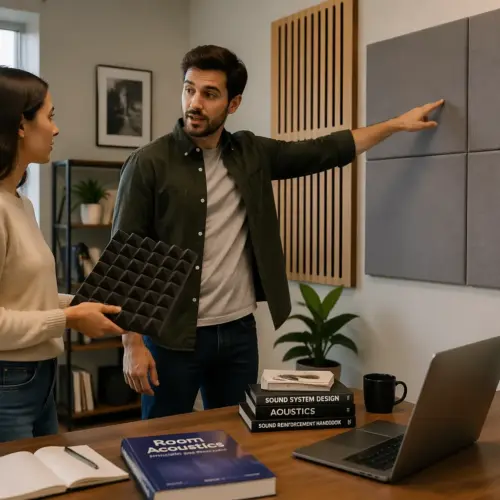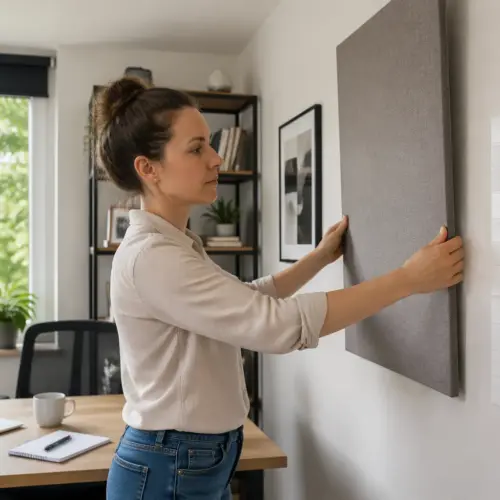


Most DIY acoustic panels fail for a boring reason, the fabric is too tight, too thick, or too “decorative” to let sound reach the insulation. If the fabric blocks air, it also blocks the high frequencies you are trying to tame in a home office.
I have wrapped panels in expensive cloth that looked perfect and measured worse than cheap muslin because it acted like a thin tarp. That experience is why I like a simple acoustic panel fabric breathable test before I buy yards of anything.
You do not need lab gear to make a good choice, but you do need to stop guessing based on how fabric looks online. A couple quick checks can tell you whether a fabric is acoustic transparent fabric or a sound reflector in disguise.
The frustrating part is that a fabric can be beautiful, easy to staple, and still be the weak link that keeps your panels from doing their job. If you have ever wondered why a room still sounds “spitty” after adding panels, the face fabric is a prime suspect.
Fabric choice is also one of the few parts of a panel build that you can change later without rebuilding the frame. That makes it worth slowing down and testing, because swapping cloth is cheaper than buying new insulation.
What makes fabric “acoustically transparent”
Acoustically transparent fabric lets air move through it with very little resistance, and sound waves ride on that air movement. When you put that fabric over mineral wool or fiberglass, the sound reaches the absorber instead of bouncing off the face.
In practical terms, transparency matters most above roughly 1 kHz where wavelengths get short and surface effects show up fast. If your fabric is too dense, your panel can start acting like a midrange absorber with a slightly reflective “skin” on top.
Weave openness is the big driver, but fiber type and finish also matter. A loose weave cotton can work great, while a synthetic with a heavy backing or stain guard can fail even if it looks breathable.
Thickness alone is not the villain, because some thicker upholstery fabrics still have open pores and pass air easily. The problem is the combination of tight weave plus coatings, since that is where you get that papery, windbreaker feel.
When people say “acoustic transparent,” what they really mean is that the fabric is not the limiting layer in the system. The insulation and the air gap behind it should be doing the work, not fighting a fabric barrier on the front.
Airflow resistance is the concept that ties it all together, because porous absorbers need particle velocity to enter the material. If the face layer slows that airflow too much, you lose the bite of the panel right where speech intelligibility lives.
You can also think of the fabric as a very thin filter, and you want that filter to be as neutral as possible. A neutral fabric makes the panel behave like the insulation thickness suggests, instead of shifting the absorption curve in a weird way.
Some fabrics are technically breathable but have a fuzzy nap that adds a little surface damping. That is not automatically bad, but it can make the top end feel slightly softer, which may or may not be what you want for a bright room.
Another trap is elastic stretch fabrics that feel airy when you pull them but close up when relaxed. If the weave tightens when stapled flat, you can end up with a panel that looks clean and still reflects more than expected.
Humidity and dust also change how fabric behaves over time, especially in a home office where HVAC cycles all day. A fabric that starts breathable can slowly clog if it is a lint magnet, so a slightly more structured weave can stay consistent longer.
If you are building panels as part of a bigger room plan, fabric transparency keeps your results predictable. Predictability is the whole point, because you want the room to sound the same on Monday morning as it did when you finished the build.
The quick breath test and a better DIY light test
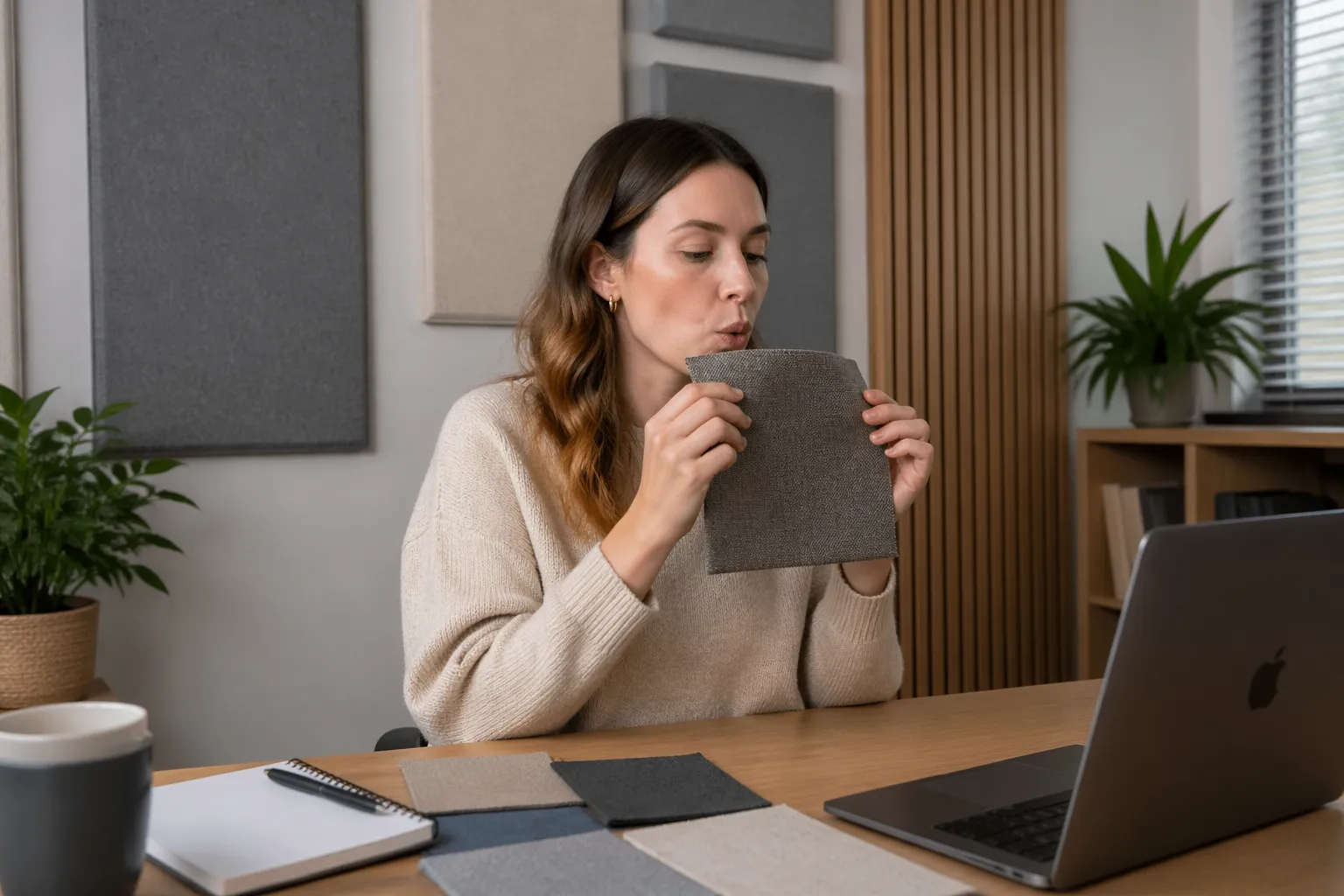
The classic acoustic panel fabric breathable test is the breath test, you hold the fabric to your mouth and try to blow through it. If it feels like blowing through a T-shirt, you are probably fine, and if it feels like blowing up a balloon, skip it.
I do not trust the breath test alone because your lungs are not a calibrated instrument and thick fabric can fool you. Some fabrics pass air but still have a fuzzy surface that scatters highs a bit, which is usually fine but worth knowing.
The better DIY check is a light test, because it reveals weave openness and any hidden backing. Put your phone flashlight behind one layer of fabric in a dark room and look for an even field of tiny pinpoints.
If you see almost no light, or you see patchy areas that look “painted,” that usually means a backing, a coating, or a very tight weave. When I can clearly see the flashlight texture through the cloth, it almost always behaves like acoustic transparent fabric on a panel.
For the breath test, I try to keep it consistent by using the same effort and comparing fabrics back to back. If you test one sample today and another next week, your memory will lie to you, so do a quick mini shootout.
I also test the fabric doubled over once, because some weaves are fine in a single layer but get restrictive when you wrap and overlap at the edges. Your panel face is one layer, but your corners and folds can become two or three layers in spots.
The light test gets even more useful if you tilt the fabric at a few angles. Some materials have a subtle backing that only shows when the light hits it off axis, which is exactly how it will behave under room lighting.
If you want to be extra practical, do the light test on the exact color you plan to use. Dark dyes can make a fabric look denser than it is, and sometimes the black version of a fabric has a different backing than the beige version.
Another simple check is the “hand drum” test, where you hold the fabric tight and tap it lightly. If it sounds papery and sharp, that can hint at coatings or tightness that might reflect highs.
I also like to rub the fabric between my fingers and listen for a crisp plastic noise. That sound often comes from finishes that make cleaning easier, and those finishes are rarely your friend on absorbers.
If you have a spare piece of insulation, you can do a quick reality check by laying fabric over it and clapping near the surface. It is not a measurement, but you can often hear when a fabric adds a little “slap” compared to a more open weave.
The point of these tests is not perfection, it is avoiding the obvious mistakes. Once you eliminate the fabrics that behave like barriers, most of the remaining options will work well enough for a home office.
Fabric types that usually work (and ones that don’t)
For home office panels, you want fabrics that are plain, porous, and boring in the best way. Think speaker grille cloth, burlap with consistent weave, many linens, and many lightweight polyesters sold specifically as acoustic transparent fabric.
Fabrics that usually fail are anything with vinyl backing, blackout curtain material, most outdoor “weatherproof” canvas, and many upholstery fabrics with stain resistant finishes. If it wipes clean like a rain jacket, it probably reflects sound like one too.
Speaker grille cloth is popular because it is designed to get out of the way, and it tends to stretch nicely around frames. It also comes in wide widths, which helps when you are covering big panels without seams.
Burlap can work surprisingly well, but quality varies wildly and some rolls smell like a farm for a while. If you go burlap, look for consistent weave and avoid the super scratchy, oily stuff that sheds fibers.
Linen and linen blends often hit a sweet spot because they look like real home decor while staying breathable. The catch is that some linen drapery fabrics are tighter than they look, so you still want to do the flashlight test.
Basic cotton muslin is the unsung hero for budget builds, especially if the panels will be hidden behind art or a decorative front layer. It is easy to staple, easy to find, and usually passes the breath test without drama.
On the “usually wrong” list, anything labeled “blackout” is basically telling you it is designed to block airflow and light. Blackout fabrics are great for windows, but they are the opposite of what you want on an absorber face.
Outdoor canvas and marine fabrics are built to resist water and sun, which often means coatings and tight weaves. Those features are awesome for patio cushions and terrible for acoustic panels.
Upholstery fabric is the confusing category because some upholstery weaves are breathable and some are basically laminated. If the sample has a visible scrim backing or a foam-like layer, that is a strong hint it will underperform.
Velvet and velour can look incredible, but they are a gamble because the pile and backing vary. Some velvets are surprisingly open, while others behave like a blanket stretched over your insulation.
If you want a “premium” look without paying premium acoustic-fabric prices, look at commercial polyester weaves marketed for office partitions. Many of those are designed for airflow and durability, but you still need to test for backings.
| Fabric category | Typical breathability result | Common home office use case |
|---|---|---|
| Speaker grille cloth | Excellent, very low resistance | Clean modern panels, visible texture control |
| Open weave linen or linen blend | Good to excellent, depends on weave | Natural look panels, warm neutral colors |
| Muslin or broadcloth cotton | Good, consistent airflow | Budget builds, hidden panels behind art |
| Upholstery fabric with backing | Poor, often blocks airflow | Looks great, usually wrong for absorbers |
| Blackout curtain fabric | Very poor, acts like a barrier | Use for light control, not for panel faces |
If you are trying to match existing furniture, do not assume the matching fabric will work just because it is “woven.” Many coordinated upholstery lines use the same backing across multiple colors, so the whole set can fail together.
If you are sensitive to itch or fibers, you can also use a thin inner layer like cheap muslin directly over the insulation and then your nicer outer fabric on top, as long as the outer layer stays breathable. That approach keeps stray fibers contained without turning the panel into a drum.
Balancing looks, durability, and sound performance
People obsess over Guilford of Maine because it looks “finished,” stretches nicely, and behaves predictably on absorbers. The downside is price, and for a whole home office build, that number adds up fast.
There are Guilford of Maine alternatives that work well, but you have to screen them like you would screen a microphone, you check specs and you do your own quick tests. If a listing never mentions acoustic transparency, assume it is decorative fabric first and test it hard.
Sound performance is usually forgiving if your panel is thick and your fabric passes air, but looks and handling can make or break the project. A fabric that snags, frays, or refuses to stretch will make your corners ugly even if the absorption is perfect.
Panel fabric durability matters more in a home office than people admit because chairs bump panels, pets rub against them, and you will vacuum them eventually. I would rather use a slightly tougher weave that still passes the acoustic panel fabric breathable test than a delicate cloth that pills after a month.
Stretch is a practical feature, because it lets you pull wrinkles out without over-tensioning the weave. Some fabrics have zero give, and those are the ones that make you chase a diagonal crease for an hour.
Fraying is another hidden cost, because a fabric that unravels forces you to use more staples and more fold bulk. A cleaner-cut fabric makes the back side neater and reduces the chance of a staple tearing through later.
If you have kids or pets, snag resistance matters as much as breathability. A fabric can be acoustically perfect but still look destroyed if a cat decides your panel is a climbing wall.
For offices where you record voice, you also want a fabric that does not rustle. Some stiff synthetics make noise when brushed, and that can show up if a panel is near a mic stand or you bump it during a take.
Cleaning is part of durability too, and not all fabrics handle vacuuming the same way. A fabric that pills easily will look tired fast, even if the panel is never touched.
Price is not a reliable indicator, because expensive designer fabrics can be dense and coated, while cheap commercial fabrics can be open and honest. The goal is not luxury, it is a fabric that disappears acoustically and behaves physically.
If you are building a lot of panels, buy enough fabric from the same dye lot. Even small shade shifts become obvious when panels sit side by side, especially in daylight.
It also helps to decide where you are willing to compromise, because you usually cannot max out every category at once. I prioritize breathability first, then handling, then durability, and I treat color as the last knob to turn.
Color and texture choices that hide seams and staples
Flat, solid colors show every mistake, especially on large panels where the fabric has long, uninterrupted lines. If you are new to wrapping, choose a subtle heather, a small weave pattern, or a lightly mottled texture that breaks up shadows.
Darker colors hide staples and frame edges, but they also show dust and pet hair more than you expect. Mid grays, warm charcoals, and muted blues are forgiving and look “office” without turning the room into a cave.
If you plan to butt panels together, texture is your friend because it hides tiny alignment issues at the seams. A basket weave or fine tweed look can make a DIY panel wall read as one continuous surface.
Be careful with very shiny fabric because it reflects light and makes ripples obvious, even if the fabric is acoustically fine. Matte finishes look calmer on video calls, which is a real feature for home office geometry and lighting.
Think about the direction of the weave, because some fabrics change shade when rotated. If you wrap one panel with the weave running vertically and the next horizontally, they can look like different colors from across the room.
If you are using a patterned fabric, small patterns are safer than large ones. Large patterns make it obvious when a panel is slightly skewed or when a seam does not line up perfectly.
Edge shadows are what usually give away DIY panels, not the face texture. A slightly textured fabric can hide the transition between the frame edge and the front plane, especially under overhead lighting.
If you are mounting panels with a small air gap, the wall color behind them can influence how the fabric reads. Lighter fabrics can pick up the wall tone, so a quick test hold-up against the wall can prevent surprises.
For a cleaner look, some people add a thin trim frame over the fabric, but that is only worth it if the fabric is already doing the acoustic job. If you use trim, keep it minimal so you do not create a reflective border around every panel.
If you want panels to blend in, choose a fabric close to your wall color and let the texture do the work. If you want them to be a design feature, pick a contrasting color but stay away from glossy or coated finishes.
In a room with mixed lighting, like daylight plus a warm desk lamp, neutral fabrics stay consistent. Strongly colored fabrics can shift a lot between lighting sources, which makes panels look mismatched even if they are not.
Fire-retardant and odor considerations for home offices
If your home office is in a spare bedroom, you still want to think about fire behavior, especially if panels sit near power strips, lamps, or tube heaters. Many acoustic fabrics are rated, but a lot of cheap cloth online has no documentation and no consistent fiber content.
Some Guilford of Maine alternatives come in inherently flame resistant polyester, and those can be a good middle ground. If you cannot verify a rating, at least avoid fabrics marketed for outdoor awnings or heavy drapery with mystery coatings.
Odor is a sneaky problem because mineral wool, spray adhesive, and some fabrics off gas in a closed office. I have had panels smell like a new shower curtain for weeks when I used a cheap synthetic with a strong chemical finish.
Washability helps, but pre washing can shrink fabric and make it harder to stretch cleanly over frames. If you need to wash, buy extra yardage, test a small piece first, and re run the acoustic panel fabric breathable test after drying.
Fire ratings are not just a bureaucratic thing, because they reflect how a fabric behaves when something goes wrong. Even if your room is low risk, you do not want to decorate it with materials that melt, drip, or flash easily.
Inherently flame resistant fabrics tend to keep their properties after cleaning, while treated fabrics can lose performance if washed aggressively. That matters if you plan to vacuum often or spot clean with products that might strip finishes.
If you are using spray adhesive inside the panel, give it time to cure before you close everything up. A panel that smells fine in the garage can smell intense in a small office once it warms up.
Some mineral wool products have a mild odor when first unwrapped, and that can combine with fabric smell in a way that feels worse than either alone. Airing out insulation and fabric separately for a day can make the finished panels much more pleasant.
If you are sensitive to smells, avoid fabrics with heavy dye odor or strong “new clothing” scent. That smell often comes from finishing chemicals, and those are also the fabrics that tend to feel less breathable.
For a home office, comfort matters because you sit in the room for hours. A panel that performs well but smells weird will make you regret the build every time you close the door.
If you do need to deodorize, do not soak the panel or you risk warping frames and trapping moisture in insulation. It is better to swap the fabric than to try to rescue a stubborn odor with aggressive cleaning.
Practical buying checklist for acoustic fabric
Online fabric shopping is a trap because product photos hide weave density and sellers love vague words like “premium” and “theater grade.” I treat every listing like it is guilty until proven breathable.
Order swatches when you can, because a $5 swatch can save you $150 in unusable fabric. When swatches are not available, I pick sellers that show close up weave photos and list weight in ounces per yard.
Check whether the fabric has a backing, and if the description mentions “blackout,” “water resistant,” or “stain guard,” assume it will fail the light test. Also watch for felted surfaces, because some are fine and some act like a thin blanket that dulls highs more than you want.
For panel fabric durability, I look for tight enough yarn to resist snags but open enough weave to breathe, which sounds contradictory until you handle a few samples. The sweet spot often looks like a plain commercial upholstery weave without the backing and without the heavy finish.
When a listing includes airflow or acoustic data, I pay attention, but I still verify with a swatch. Some sellers reuse descriptions across multiple products, and the fabric you receive can be different from the fabric in the marketing copy.
Fabric weight can be a clue, but it is not a verdict. A heavier fabric can still be open weave, and a light fabric can still be coated, so treat weight as a hint, not a pass or fail.
Look for close-up photos where you can see individual threads, not just lifestyle shots of curtains. If a seller refuses to show the weave, it usually means the weave is not something they want you to notice.
Check the return policy before you buy yardage, because some fabric stores treat cut fabric as final sale. If you cannot return it, your swatch step becomes even more important.
Pay attention to width, because narrow fabric forces seams or odd wrapping direction. Seams are not the end of the world, but they add time and they make pattern matching harder.
If you are building multiple panels, do the math on total yardage with mistakes included. I like to add at least one extra panel worth of fabric so I can redo a wrap without panic.
Finally, test your chosen fabric with your actual staple gun and frame scrap if you can. Some fabrics tear around staples unless you use a wider crown or adjust tension, and it is better to learn that on a sample than on your final panel.
Studio geometry context, why fabric choice changes with placement
In a home office studio setup, panel placement does a lot of the heavy lifting, and fabric choice can either support that or blunt it. First reflection points on side walls and ceiling clouds benefit from the most breathable fabrics because those spots deal with strong high frequency energy.
Back wall panels in a small room often target lower mids, so fabric differences are a little less dramatic there. Still, a tight fabric can make the room sound oddly “boxy” because you tame some mids while leaving a bit of zing in the top end.
If you use thin 1 inch panels, fabric becomes more important because the absorber does not have much depth to work with. A thin panel with a slightly restrictive cloth can start behaving like wall decor, which looks nice but does not fix the problem you can hear on calls.
For bass traps, fabric breathability still matters, but you can prioritize toughness because those corners get bumped and vacuumed. I still run the acoustic panel fabric breathable test, but I accept a little more resistance if the fabric is rugged and the trap is thick.
Ceiling clouds are a special case because they sit close to lights and they catch airflow from vents. A fabric that is too loose can sag over time, so you want breathable but also stable, especially on large frames.
If you are placing panels directly behind your monitor speakers, fabric can affect the perceived brightness more than you expect. That area is full of direct energy, so a slightly reflective fabric can make the room feel harsher even if other spots are treated.
Panels behind a desk chair take more abuse, which pushes you toward tougher weaves. In that position, a small loss in top-end absorption is often less noticeable than a fabric that gets shredded by daily use.
If your office doubles as a bedroom, you might place panels higher to keep them away from bedding and traffic. Higher placement can make the room sound more natural, but it also means the panels are more visible, so fabric aesthetics matter more.
Corner traps often end up near doors or closets, and that is where scuffs happen. A fabric that can handle being brushed without fuzzing up will keep those traps looking clean longer.
If you are doing a mix of absorber panels and diffuser elements, keep the fabric consistent across absorbers so the room looks intentional. Visual consistency helps the space feel like a studio corner instead of random rectangles on the wall.
Placement also affects how much dust the panels collect, because airflow patterns in a room are not uniform. Panels near vents or fans may need more cleaning, so a fabric that survives gentle vacuuming is a practical win.
Color and texture choices that hide seams and staples
If you are wrapping panels that will sit behind a desk, you can cheat by using darker fabric on the lower half of the room. It hides scuffs and chair marks, and it keeps your panels looking newer longer.
For panels that will be on camera, avoid heavy texture that moire patterns on webcams. A medium texture that reads as “fabric” in person but smooth on video is the safest bet.
Webcams also exaggerate contrast, so a fabric with tiny high-contrast threads can shimmer on screen. If you do a lot of calls, it is worth recording a quick test clip with a swatch pinned to the wall.
If you are mixing panel sizes, keep the fabric texture similar so the wall reads as one system. Different textures can make panels look like mismatched furniture even when the colors match.
Staple shadows usually show up when the fabric is thin and the frame edge is sharp. A slightly thicker weave can hide that edge without becoming acoustically restrictive, which is another reason to test rather than assume.
If you want a clean gallery look, consider wrapping the sides as carefully as the front. Side visibility depends on where you sit, and a neat side wrap makes the whole build feel more professional.
Seams are not always bad if you plan them, because a seam can align with a frame member and disappear. Random seams placed wherever fabric ran out are the ones that catch your eye forever.
If you are using printed fabric, remember that ink can reduce breathability in the printed areas. A lightly printed pattern is usually fine, but a heavy solid print can behave like a thin coating.
- Choose heathered or speckled colors for seam camouflage
- Use mid tone grays to hide dust without darkening the room
- Avoid glossy finishes that reveal ripples
- Match fabric direction across panels to reduce shade shifts
- Pick a weave that hides staple shadows at the back edge
- Test on camera for moire before buying full yardage
If you are unsure, pick a neutral fabric first and let your wall art add color elsewhere. Neutral panels are easier to live with, and they make it simpler to rearrange the room later.
Also consider how the fabric looks under your actual desk lighting, not just in daylight. Many home offices use warm bulbs, and that can turn a “cool gray” fabric into something that looks slightly green or brown.
Wrapping tips for clean corners and tight surfaces
Clean wrapping starts before you touch fabric, because a square frame makes everything easier. If your frame is twisted or your insulation bulges, the best acoustic transparent fabric will still show waves.
I like to iron fabric first, then cut with at least 3 to 4 inches of extra on each side so I can pull evenly. If you cut too tight, you will over stretch the weave and it can look thin or shiny in the center.
Staple the centers first, then work outward in a cross pattern like tightening lug nuts on a wheel. That method keeps tension even and reduces the chance of diagonal wrinkles that never quite disappear.
For corners, fold like wrapping a present and keep the bulk on the back where nobody sees it. If the fabric is thick, trim a little inside the fold so the corner does not become a hard lump that prints through the front.
If your fabric has a visible weave direction, mark it before you cut so every panel matches. It is easy to rotate a piece by accident when you are working fast, and then one panel will look slightly different in certain light.
Use a clean work surface, because insulation fibers and sawdust love to cling to fabric. A quick vacuum of your bench before wrapping saves you from trapping debris under the face where it becomes a permanent bump.
If you are using mineral wool, consider a thin inner liner like landscape fabric or muslin to contain fibers. Keep that liner breathable too, because stacking multiple restrictive layers is how panels quietly lose performance.
Do not over-stretch just to chase perfection, because some fabrics distort and the weave starts to look uneven. A slightly relaxed, even tension usually looks better than a super tight wrap with shiny stress lines.
When you staple, aim for consistent spacing rather than maximum staples. Too many staples can tear weak fabric, while a steady pattern holds tension without creating weak points.
If you make a mistake, pull staples and redo it instead of trying to hide it with brute force. Wrinkles that you “almost” fixed will be the only thing you see once the panel is on the wall.
After wrapping, stand the panel up and look at it from a few angles and distances. Problems that are invisible up close can show up from across the room, especially under raking light.
If you are mounting panels with French cleats or brackets, plan your staple placement so hardware sits flat. A lump of folded fabric under a bracket can make the panel rock or sit crooked.
Conclusion
If you remember one thing, run a simple acoustic panel fabric breathable test before you commit, because looks do not predict sound behavior. The breath test is fast, and the flashlight test catches the sneaky backings and coatings.
After that, choose fabric like a person who has to live with it, because panel fabric durability and clean texture matter in a working home office. There are plenty of Guilford of Maine alternatives that look professional, behave like acoustic transparent fabric, and wrap cleanly if you pick with your hands and not your eyes.
The goal is not to find one magic fabric, it is to avoid the handful of fabrics that sabotage the whole build. Once you do that, your insulation thickness and placement decisions can actually deliver the improvement you were aiming for.
If you are on the fence between two options, pick the one that passes the light test more clearly and feels less coated in your hands. Your ears will thank you, and your panels will keep working the same way long after the novelty of the project wears off.