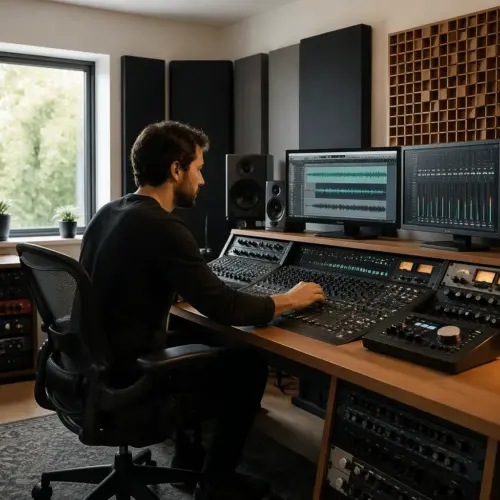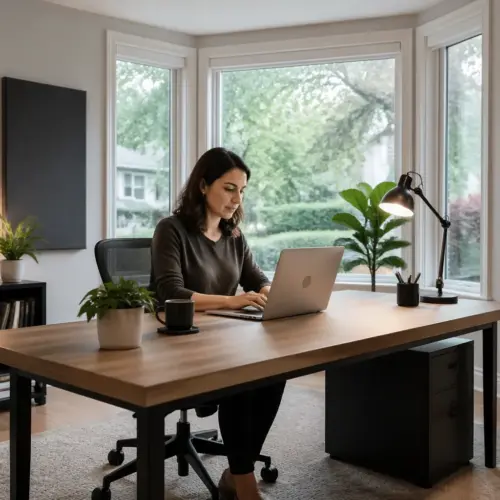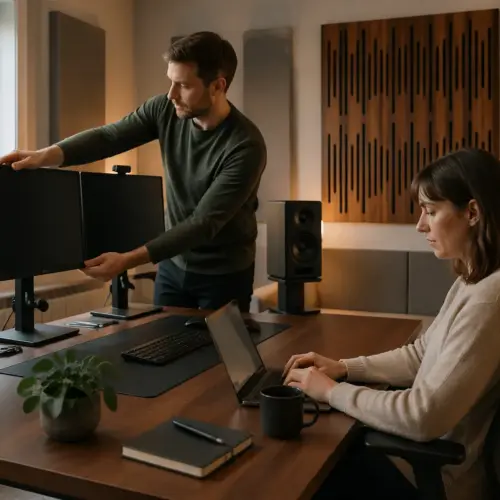


Most home office studios fail in the same boring way, the desk ends up wherever the power outlets and Wi Fi make life easy. Then you wonder why your low end is weird, your mixes do not translate, and video calls sound boxy.
The desk against wall vs floating desk acoustics debate looks like interior design, but it is really geometry and physics. Where your speakers sit relative to the front wall sets up cancellations you cannot EQ away.
I have moved the same pair of nearfields in the same room and watched the bass swing from tight to hollow with a shift you could measure in inches. Before you buy more panels, the smarter move is to pick a layout that gives treatment a fair chance.
Why the front wall relationship matters
The front wall is the surface directly behind your speakers, not the wall behind your chair. That one boundary can dominate what you hear from about 60 Hz up through the low mids in a small room.
People obsess over foam squares and forget that boundaries are the real EQ in a bedroom studio. If the front wall relationship is wrong, you can end up mixing around a hole that only exists at your seat.
When a speaker plays bass, sound goes forward to you and backward to the front wall at the same time. The reflection bounces back and combines with the direct sound, and sometimes it cancels instead of adding.
That cancellation is not subtle when it lands on a musical note you rely on, like the body of a kick or the first octave of a bass. You can boost that frequency all day and it still will not feel right at the listening position.
This is SBIR, speaker boundary interference response, and it is the reason a kick drum can vanish at your chair while it thumps in the hallway. The cancellation frequency depends mostly on front wall distance, which is the distance from the speaker to that wall.
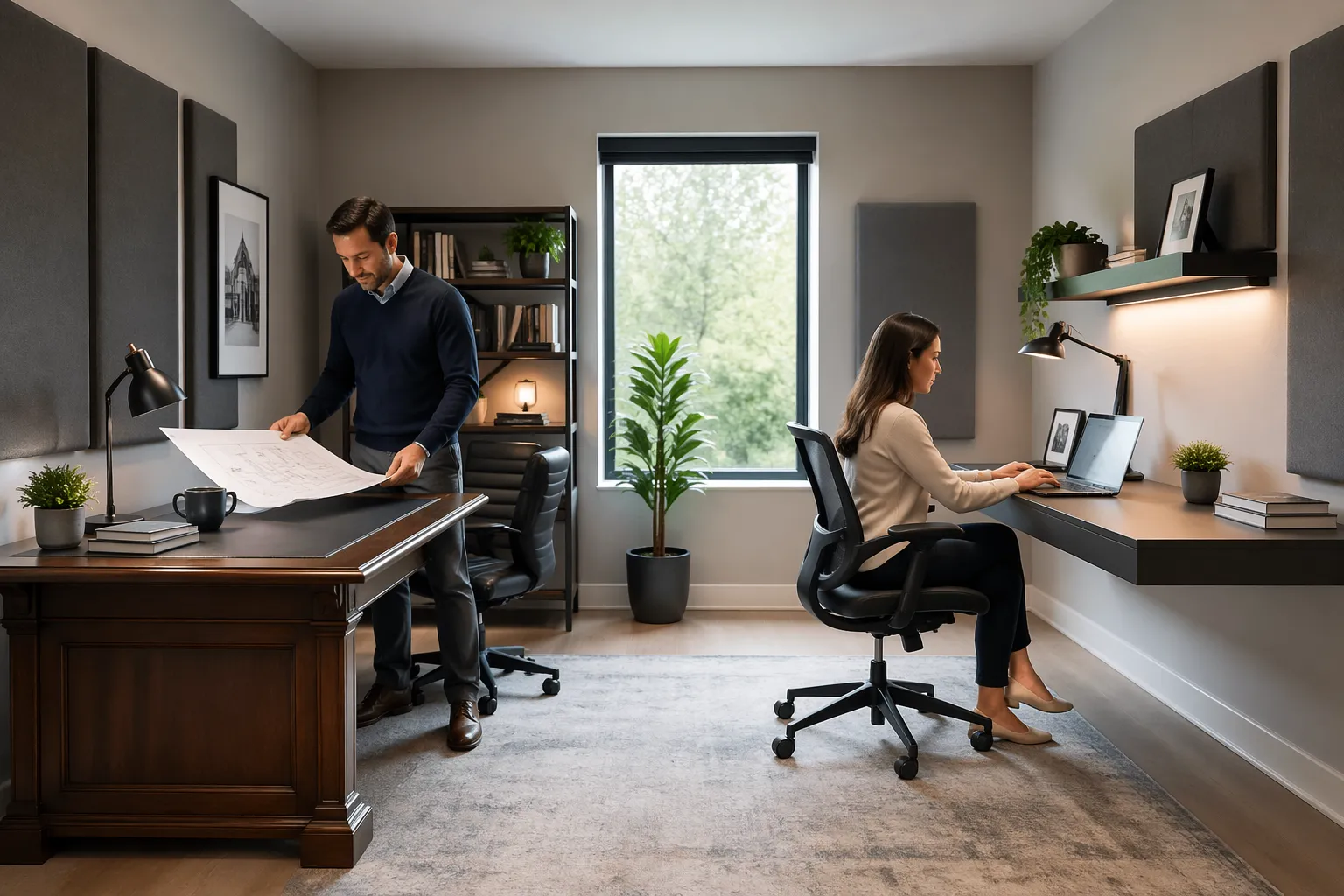
SBIR is also why two people can argue about the same monitors and both be right, because they are hearing different boundary setups. In a small room, the wall is basically part of the speaker whether you like it or not.
If you change the front wall distance by a foot, you can move the deepest null by dozens of Hertz. That is why desk placement is not a vibe choice, it is a tuning choice that controls what problems you must treat later.
It is also why “just put the speakers where they look good” is bad advice for anyone doing critical listening. A clean looking setup that lies to you is still a lying setup.
The front wall relationship interacts with your listening distance too, because nearfields are designed to reduce room influence but they cannot erase it. If you sit farther back, you hear more of the room and the nulls feel deeper.
Even if you use headphones for most work, you still make decisions on speakers at some point, and that is when SBIR bites. If your room is consistent, you can learn it, but if it is chaotic you will never trust it.
Desk against the wall: benefits and common issues
Putting the desk against the front wall is popular because it saves floor space and keeps cables short. In tight home offices, it can be the only way to keep a clear walkway and still have a decent screen distance.
It also tends to force you into a predictable geometry, which is underrated when you are learning your room. When the layout is simple, the fixes are simpler too.
Acoustically, the big benefit is that your speakers can sit very close to the front wall, which pushes the SBIR null higher in frequency. If the speakers are within a few inches, the deepest cancellation can land above the sub bass range where it is easier to manage with placement and absorption.
That close placement can also increase low frequency output because of boundary reinforcement, which can be useful if you mix quietly. The trick is making sure the extra bass is smooth, not lumpy.
Some monitors are designed to live near a wall, and they even include boundary EQ switches for it. Those switches are not magic, but they can help you fine tune after the geometry is reasonable.
The common mistake is leaving the speakers a foot or two off the wall because the desk is deep or you want space for stands. That middle zone tends to put the null right where bass guitar fundamentals and kick weight live, and it makes your decisions unreliable.
Another common mistake is pushing the desk against the wall but leaving the speakers pulled forward on the desktop, which recreates the same problem. If you commit to this layout, commit all the way and measure the distance from the speaker baffle to the wall.
Another issue is early reflections off the wall itself, especially if you have a big monitor, shelves, or a hard surface right between the speakers. You can treat the wall with thick absorption, but the desk against the wall layout often forces you to treat around furniture instead of treating cleanly.
That furniture can also create little cavities and ledges that ring, like a shelf above the desk or a cabinet right under the speakers. If you hear a honky midrange that follows you across multiple mixes, do not assume it is your ears, check the objects first.
Desk against the wall setups can exaggerate desk bounce because the desk surface is usually large and close to the speakers. A small tilt adjustment or a slightly lower desk height can change the reflection path more than you would expect.
Video calls are part of the modern home studio, and this layout can be great for camera framing because you face the wall and can control the background. The downside is that hard surfaces behind the screen can make your mic sound like it is in a shoebox unless you add soft treatment.
If you do a lot of typing, the desk against wall layout is usually the most ergonomic because everything is reachable and stable. Comfort matters because if you hate sitting there, you will stop listening carefully and start guessing.
Floating desk: what improves and what gets harder
A floating desk means the desk and speakers sit away from the front wall, often somewhere around a third of the room length. People choose it to get symmetry, keep speakers off the wall, or create a nicer workspace layout with storage behind the desk.
It can also make the room feel less like you are being punished by the architecture, which is real if you work in the space every day. A layout you enjoy tends to get better over time because you keep tweaking it instead of avoiding it.
The upside is flexibility, you can pick a listening position that avoids the worst length mode and gives you room for thick treatment on the front wall. The downside is that SBIR becomes sensitive, because now front wall distance is large enough to put cancellations right in the meat of the low end.
That sensitivity means you can move the desk two inches and suddenly the bass note you were balancing all week changes. It is not that the room is broken, it is that you are sitting in a more complex interference pattern.
Floating desks usually make it easier to keep the left and right speakers away from side walls equally, which helps imaging. When the stereo image locks in, you stop over panning and you stop fighting phantom center weirdness.
They also make it easier to place bass traps in the front corners because you are not blocking them with furniture. Corner trapping is not optional in many home rooms, and a layout that allows it is a layout that wins long term.
The trade is that you now have to manage the space behind the speakers, because it is a big reflective area if untreated. A bare front wall plus a floating setup can sound impressive at first and then betray you on translation.
Floating desks can create a “stage” effect where the room feels bigger, but that can be misleading if the low end is full of deep nulls. A wide soundstage is fun, but it does not help if the kick and bass relationship is a coin flip.
This layout also tends to increase cable runs and power management complexity, which sounds like a non acoustic detail until you add ground noise or hum. If you are going to float the desk, plan the power and cable routing like a grown up.
| Factor | Desk against front wall | Floating desk |
|---|---|---|
| Typical front wall distance | 0 to 8 inches | 12 to 48 inches |
| SBIR risk zone | Higher frequency, easier to mask or treat | Low bass and low mids, harder to ignore |
| Front wall treatment options | Often limited by desk and screens | Space for thick broadband absorption |
| Daily ergonomics | Great for small rooms and short cable runs | Great for circulation, storage, and camera framing |
| Speaker stand options | Often on desk or tight stands | More room for stands and isolation |
The table makes it look like floating always wins if you can treat, but reality is messier. Many people float the desk and then never install the thick front wall absorption that makes it work.
If you float the desk, you should assume you will need more low frequency control, not less. That means thicker panels, more corner trapping, and more patience with placement.
Floating also changes how you experience the room for non audio work, like writing or editing video. If the room feels calmer and less cramped, you may actually spend more time refining the setup instead of tolerating it.
How to choose based on room length and daily use
Room length matters because it sets the spacing of your front to back standing waves, and those peaks and dips stack with SBIR. In a short room, a floating desk can push you into a listening position where the length mode is ugly and hard to tame.
Width and height matter too, but length is the dimension most people fight because it controls where the chair ends up. If your chair lands at a modal null, you will keep turning up the bass and wondering why the car test is a disaster.
If your room is under about 11 feet long, I usually prefer the desk against the wall approach with speakers very close to the front wall. You give up some aesthetic freedom, but you gain consistency and you keep the listening position away from the exact middle of the room.
In a short room, the space behind you is limited anyway, so floating can make you feel like you are sitting in the back wall. That is a great way to hear every rear wall reflection and none of the truth.
If your room is longer, a floating desk can work well because you can keep your chair around 35 to 40 percent of the room length and still have space behind you. That rear space matters for comfort, but it also lets you put thick absorption or diffusion behind the listening position.
Longer rooms also give you more options for speaker to wall distance, which means you can choose a compromise distance that makes sense with your treatment plan. The key is that you are choosing on purpose, not landing there by accident.
Daily use is the part people skip, and it bites them later. If you spend eight hours a day on spreadsheets and calls, the best acoustic layout is the one you will not resent, because you will keep it and actually treat it.
If your desk must hold a laptop, two monitors, a docking station, and a pile of paperwork, a minimalist “studio” desk plan may not survive the week. A stable, repeatable setup beats a fragile perfect one.
Think about lighting and glare too, because a layout that forces you to close the blinds will change the room acoustics slightly and change your mood a lot. If the space feels bad, you will not do the careful listening that good mixing requires.
Also think about noise sources like a PC tower, HVAC vent, or a loud mechanical keyboard. If floating the desk puts your ears closer to the noise, you may mix louder and that changes how you perceive bass and balance.
If you record vocals or instruments in the same room, your desk choice affects where you can stand and where reflections hit the mic. A layout that leaves a clear corner for recording can be more valuable than a layout that looks like a magazine photo.
Speaker placement differences for each layout
With a desk against the wall, the goal is simple, get the speaker baffles close to the front wall and keep left to right symmetry. You also want the speakers far enough from side walls to avoid strong early reflections, which can be tricky in narrow rooms.
Symmetry is not just about the speakers, it is about what is next to them, like a window on one side and a closet door on the other. If the left speaker “sees” a different room than the right speaker, your phantom center will wobble.
In that layout, I like speakers on stands that straddle the desk rather than sitting on the desktop, because the desk reflection can smear the upper mids. If you must put them on the desk, use isolation pads and keep the tweeters at ear height.
Stands also let you place the speakers slightly behind the desk edge, which can reduce a strong early reflection off the desk surface. The goal is a clean line from tweeter to ear with as few shiny surfaces in between as possible.
Watch the distance between the speakers and your listening position, because nearfields want a reasonable triangle, not a wide TV soundbar spread. If you go too wide, you will mix with a hole in the middle and overcompensate with reverb and stereo tricks.
With a floating desk, you have to decide which problem you want, SBIR from the front wall or reflections from the desk and screens. Pulling the speakers forward can clean up desk bounce, but it increases front wall distance and can create a deep low frequency null.
If you have a subwoofer, floating setups can get even more complicated because now you have two boundary problems to solve. Sub placement can fix or worsen the main speaker SBIR, so you want a plan rather than random crawling and praying.
The cleanest approach is often to keep the speakers on stands, keep the desk surface low, and leave a clear line from speaker to ear. That takes more space, and it is where many home offices compromise by using a smaller desk or a keyboard tray.
In floating layouts, toe in becomes more important because the side wall distances can change quickly as you move the desk. A small toe in adjustment can reduce side wall splash and make the center image snap into focus.
Do not ignore height, because a few inches up or down changes how the desk reflection arrives at your ears. If your desk is tall, a slight downward tilt of the speakers can help, but it is better to fix the geometry than to rely on tilt alone.
Also pay attention to what is behind the speakers in each layout, because that surface controls the earliest strong reflection in the low mids. A thick absorber behind the speakers can be the difference between “tight enough” and “why does every bass note feel different.”
A decision framework you can apply in 30 minutes
You can make a solid choice quickly if you treat it like a measurement problem instead of a guessing game. Use a tape measure, a simple room sketch, and one test track you know well with steady bass.
If you have a measurement mic and REW, even better, but you can still learn a lot with careful listening. The goal is not perfection in 30 minutes, it is avoiding the obvious traps.
Start by marking two candidate setups, desk against the wall with speakers close, and floating desk with your chair around 38 percent of room length. Keep the speakers and chair centered on the room width in both cases, because asymmetry creates problems you cannot fix with EQ.
When you mark the setups, mark the speaker positions too, not just the desk, because the speakers are the real instrument here. A piece of painter’s tape on the floor can save you from losing a good position later.
Next, check front wall distance for the speakers in each setup and write it down, because that number predicts where SBIR will hit. If the floating setup puts the speakers 24 inches off the wall, expect trouble somewhere in the low end unless you plan for thick front wall absorption.
Also check how far your ears are from the back wall in each setup, because sitting too close to the rear boundary can exaggerate bass and smear transients. You want some breathing room behind the chair if you can get it.
Finally, sit and listen at a moderate level and move your head forward and back by six inches. If the bass changes a lot with tiny head movement, that layout is fragile and you will fight it every day.
Do the same test left and right by a few inches, because some setups have a narrow “good spot” that feels impressive but is not practical. If you cannot move naturally in your chair without the low end changing, you will make inconsistent decisions.
Play a track with a simple bass line that walks through notes rather than staying on one tone. If one or two notes jump out or disappear, you are hearing room interaction, not the mix.
Then do a quick reality check with your own voice, because you know what that should sound like. If speaking at the desk sounds hollow or boomy, your mic on calls and quick vocal takes will likely have the same problem.
Pick the setup that is less fragile and easier to keep consistent, even if it is not the one that looks cooler. Consistency is what lets you learn the room and mix faster.
Why SBIR shows up differently in home offices
Home offices are full of stuff that a dedicated studio does not have, like monitors, printers, bookcases, and standing desks. Those objects change boundary conditions and create extra reflection paths that can mimic SBIR dips.
A room with a couch or a thick rug can behave very differently from an empty room even if the dimensions are identical. Soft furniture can help the mids and highs while leaving the low end mostly untouched, which can make the bass problems feel more obvious.
A big screen between the speakers can act like a reflective wall a few inches behind the drivers, which changes what you hear around 1 to 4 kHz. That is why some desk against the wall setups sound harsh even when the bass seems fine.
Multiple monitors can create a little “reflection canyon” that bounces energy back at you, especially if they are angled. If your mixes keep coming out with weird upper mid balance, look at the screens before you blame the monitors.
Floating desks often place the speakers closer to the desk edge, which can reduce one reflection but increase another. If you have a deep desktop, the bounce off the desk can land right in the vocal presence range and make you mix too dark.
Keyboards, control surfaces, and even a laptop lid can act like little reflectors that change the response at your ears. Small changes in angle can make a bigger difference than swapping plugins.
Home offices also tend to have more asymmetry, like a door on one side and a closet on the other. That asymmetry can skew bass response and stereo imaging, and it makes “centered desk” more important than people think.
You can treat around these realities, but it is easier when you admit the room is a working office first. A practical workspace layout that keeps your speakers consistent usually beats a perfect plan that collapses the first time you add a second monitor.
It also means you should expect compromise and plan for it, like using movable panels or thick curtains instead of permanent construction. A flexible solution is often the only solution in a rented room or a shared space.
Another home office detail is that people often sit off axis to make room for a camera or a second workstation. Off axis listening can be fine for casual work, but it makes critical mixing harder because the speaker response changes with angle.
Even the chair matters, because tall mesh backs can reflect mids back to your ears in a subtle but annoying way. If you hear a weird comb filtered “shh” on vocals, try leaning forward and see if it changes.
Quick placement checks to run when you move the desk
Every desk move changes at least three things, the speaker wall distance, the listening position, and the angle to side walls. If you only check one of them, you can accidentally trade one problem for two new ones.
Even rotating the desk a few degrees can change the symmetry enough to shift the stereo image. If vocals stop sitting in the center, the room is usually the reason, not the mix.
These checks take five minutes and they catch the worst mistakes before you start mounting panels. They also help you keep notes so you can reverse a change that sounded good at midnight but bad the next morning.
Do the checks with the room in its normal working state, not with the chair moved away and the door closed like a lab. The room you actually use is the room you need to optimize.
- Measure speaker to front wall distance
- Measure ear position from front wall
- Confirm equal side wall distances
- Confirm tweeters at ear height
- Check desk edge is not blocking speaker ports
- Clap test for side wall flutter near the desk
- Play a sine sweep and note obvious nulls
If you do not have a sine sweep handy, play pink noise and slowly turn your head left and right. If the tonal balance changes dramatically, you have strong reflections or asymmetry that needs attention.
After you measure, take one photo from the listening position and one from behind the speakers. Those photos make it easier to spot the real differences between setups, like a monitor that ended up slightly off center.
Also check that your speakers are not firing across the short dimension when they could be firing down the long dimension, because that choice affects modal spacing. Most rooms behave better when you fire down the length, but furniture sometimes forces the opposite.
If you use rear ported monitors, make sure the port has consistent clearance in both layouts. A rear port too close to the wall can change the bass tuning and make the low end feel slow or one note.
Finally, check that the desk move did not put your ears exactly halfway between front and back walls. The exact center is often the worst place to sit for bass, even if it feels intuitively “balanced.”
Conclusion
The desk against wall vs floating desk acoustics choice comes down to what you can control in your room, especially front wall distance and symmetry. If you cannot treat heavily and the room is short, pushing the speakers close to the front wall with a desk against the wall often wins.
Desk against the wall is not a beginner compromise, it is a valid strategy that can reduce SBIR pain when done deliberately. The key is keeping the speakers truly close to the wall and keeping the setup symmetrical.
If you have length to spare and you can commit to front wall absorption and careful speaker placement, a floating desk can give you a calmer work zone and a more flexible workspace layout. Pick the option that keeps SBIR predictable, then treat the reflections you cannot avoid.
Whichever layout you choose, measure and listen like you are debugging a system, because that is what a room is. Once the geometry is stable, every panel and every tweak you add will finally do what you hoped it would do.